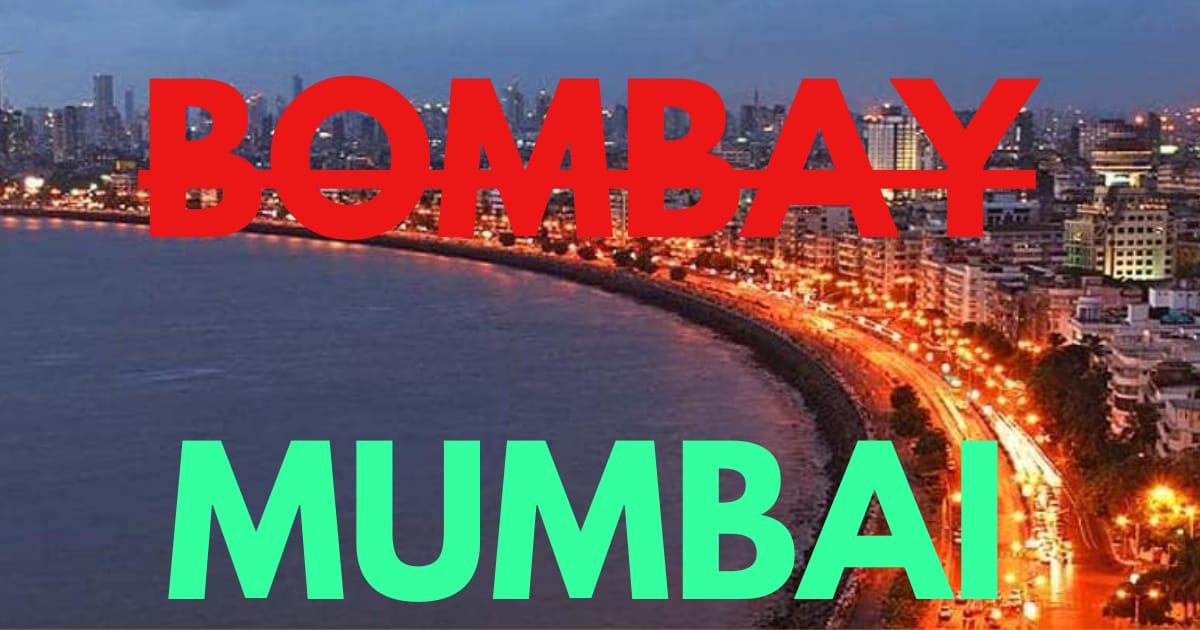
The renaming of Bombay to Mumbai in 1995 marked a significant moment in India's history, reflecting a shift towards reclaiming cultural identity and shedding colonial legacies. The decision to change the city's name was driven by political and cultural motives, primarily led by the right-wing Hindu nationalist party Shiv Sena. The party, which won elections in Maharashtra, where Mumbai is located, advocated for the name change to honour the city's patron deity, Mumbadevi
Historical Context
Legacy of British Colonial Rule: The renaming of Bombay was seen as an effort to break away from the colonial past. Shiv Sena leaders viewed "Bombay" as a corrupted English version of "Mumbai" and sought to restore the city's original Marathi identity.
Marathi Identity: The name change was part of a broader movement to strengthen Marathi identity in the Maharashtra region, with Shiv Sena aiming to promote local language and culture.
Cultural Significance: Mumbai's original name, derived from the Koli goddess Mumbadevi, held deep cultural significance for certain linguistic communities like Marathi, Konkani, Gujarati, and Kannada speakers.
Political Implications
Shiv Sena's Influence: The regional political party Shiv Sena played a pivotal role in renaming Bombay to Mumbai, aligning with its agenda to emphasize Maratha heritage and cultural pride.
Resistance and Controversy: While the name change was embraced by some, it also sparked debates and occasional violent outbursts due to the deep-rooted sentiments associated with both names.
Broader Trends
National Impact: The renaming of Bombay to Mumbai was not an isolated incident but part of a larger wave across India where places underwent name changes to shed colonial associations.
Other Indian cities like Madras changing to Chennai in 1996 exemplify similar efforts to reclaim indigenous names and promote regional languages and cultures.
The transformation of Bombay into Mumbai encapsulates a complex interplay of historical, cultural, and political factors. The renaming reflects a broader narrative of decolonisation and cultural resurgence that resonates beyond just a change in nomenclature.
Popular Categories
Read More Articles
India
BJP's Shyamkaran Tekdiwal and Scribe Manish Malhotra Appointed Members of Maa Pateshwari University Advisory Committee by Shamikh Rais Siddiqui May 30, 2026
Politics
'Union Of Lazy, Unemployed Cockroaches': All You Need To Know About Cockroach Janata Party by Awadh 360° Desk May 21, 2026
Education
Bahraich Embraces Digital Learning as “The Teacher App” Gets Grand Launch by Shamikh Rais Siddiqui May 17, 2026
Travel and Tourism
UP Bets Big On New-Age Tourism: Startups, Star Beds & A November Deadline by Awadh 360° Desk May 10, 2026