Appropriation vs. Appreciation: Reclaiming Indian Culture, Craft and Credit
The global fashion and wellness industries are currently grappling with a critical issue: the appropriation of traditional Indian cultural elements without due credit or compensation. This ongoing debate, which pits exploitative theft against genuine cultural exchange, has recently seen a significant development in the realm of high fashion, highlighting the need for acknowledgement, reciprocity, and collaboration.
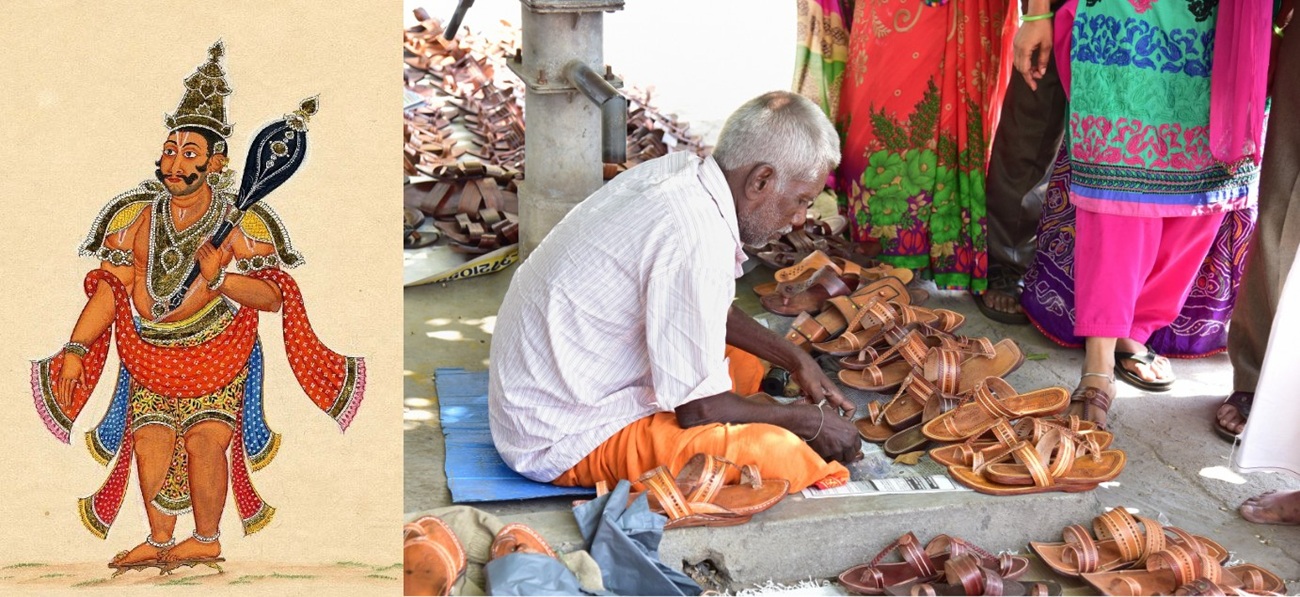
The recent controversy surrounding the Kolhapuri Chappals has brought the issue of cultural theft into sharp focus. On Wednesday, the two Indian government bodies dedicated to safeguarding and promoting the Indian leather industry and the heritage of these traditional hand-crafted leather slippers, Lidcom and Lidkar, signed a pivotal Memorandum of Understanding (MoU) with the Italian luxury house, Prada. The signing, which took place at the Consulate General of Italy in Mumbai during the Italy-India Business Forum, represents a move towards rectifying past missteps.
This partnership was spurred by a significant online backlash against Prada's Spring/Summer 2026 collection. The collection featured footwear that bore an unmistakable resemblance to the Kolhapuri chappal, a design that holds a Geographical Indication (GI) tag in India. The major point of contention was that the sandals, reportedly priced at around ₹1 lakh, were showcased at Milan Fashion Week without crediting India as the source of inspiration nor involving the original artisans. This controversy starkly illuminated the economic disparity: luxury brands profit immensely while the communities that created and perfected the craft struggle for recognition and fair wages.
The Pattern of Erasure: From Mukaish to Ayurveda
The lack of acknowledgment is not an isolated incident concerning the Kolhapuri chappal but a recurring theme across the luxury sector. The debut of the Christian Dior collection at Paris Fashion Week on June 27, 2025, provided another high-profile example. While the show created immense buzz with its star-studded audience, a particular gold and ivory coat with a sharp houndstooth pattern drew the critical attention of fashion content creator Hanan Besnovic (@ideservecouture).
Besnovic’s deep dive revealed that the coat's stunning embroidery was not of European origin but was created using mukaish, a traditional Indian embroidery technique from Lucknow, known for its intricate metalwork. The scale of the craftsmanship was immense: a reported twelve artisans worked for 34 days to finish that single garment. Yet, despite this meticulous and specialized labor, there was not a single mention of India, Lucknow, or the artisans responsible for preserving this centuries-old technique. The coat was presented merely as a coveted item with a jaw-dropping price tag, the cultural history and skilled human effort erased from the narrative.
The appropriation of Indian heritage, including crafts, textiles and traditions, by the West is a widely discussed issue spanning the fashion, wellness, and craft industries. This process often involves a power imbalance, where traditions from a marginalized culture are adopted and commercialized for profit, leaving the original creators unacknowledged and struggling.
Beyond footwear and embroidery, countless other Indian elements have been absorbed and rebranded. Traditional techniques like Gujarat mirror work and prints have been copied and misleadingly marketed as "Nordic couture." The distinctive, teardrop-shaped Paisley motif, originally called boteh and famously refined in Kashmir, lost its Persian and Kashmiri heritage after being mass-produced in Paisley, Scotland. Similarly, intricate Ikat & Bandhani prints and various high-skill embroideries like Gota and Resham are regularly incorporated into global collections, treated as mere aesthetic trends rather than specialized, inherited skills.
In the wellness sphere, yoga and Ayurveda (ancient systems rooted in Indian philosophy and medicine) have been widely commercialized. Yoga is often stripped of its deep spiritual and meditative core and rebranded as a purely physical fitness routine. Meanwhile, Ayurvedic concepts and herbs are frequently rebranded or patented by Western companies, profiting from indigenous knowledge while failing to credit the source. Even traditional Indian exercise equipment like the Gada Mudgal (Indian Clubs), rooted in the Akhada traditions, was adopted by the British and rebranded as "Indian clubs," with their original context sidelined.
The Way Forward
The debate ultimately centers on the fine line between exploitative theft and enriching cultural exchange. Most cultural commentators conclude that appropriation is rarely justified because it typically involves commercialization without credit, a power imbalance, and a dilution of the sacred or cultural meaning. However, appreciation is welcomed when it honors the source.
To move constructively from appropriation to appreciation, the path forward requires deliberate action.
Consumers should consciously buy from the source, supporting Indian artisans and brands that source ethically. India must aggressively protect unique products with Geographical Indications (GI) tags to ensure economic benefits return to the original communities.
Furthermore, Western designers must transition from copying designs to collaborating with Indian artists. The landmark MoU between Prada and Lidcom/Lidkar serves as a hopeful, albeit belated, precedent for a future where inspiration leads to partnership, ensuring the creators are fairly compensated and the cultural narrative remains intact.
The goal is not to stop cultural flow but to ensure that this flow is a respectful, two-way street, one that validates, compensates, and celebrates the rich heritage of India.
Popular Categories
Read More Articles
Business
D2C plant-based nutrition brand Earthful is hiring Moms to Speak on Menopause & is offering ₹1 Lakh Stipend! by Awadh 360° Desk December 15, 2025
Politics
BJP turns to OBC leader Pankaj Chaudhary for UP top post by Awadh 360° Desk December 13, 2025
Business
KGMU, Aditya Birla Capital Inaugurate State-of-the-Art BMT Ward to Transform Cancer Care in Uttar Pradesh by Awadh 360° Desk December 12, 2025
Business
D2C Skincare brand Conscious Chemist raises Rs 15 Crore in bridge round led by Atomic Capital by Awadh 360° Desk December 9, 2025