'Union Budget 2026 reinforces India’s manufacturing ambitions': Entrepreneurs react to announcements by FinMin Nirmala Sitharaman
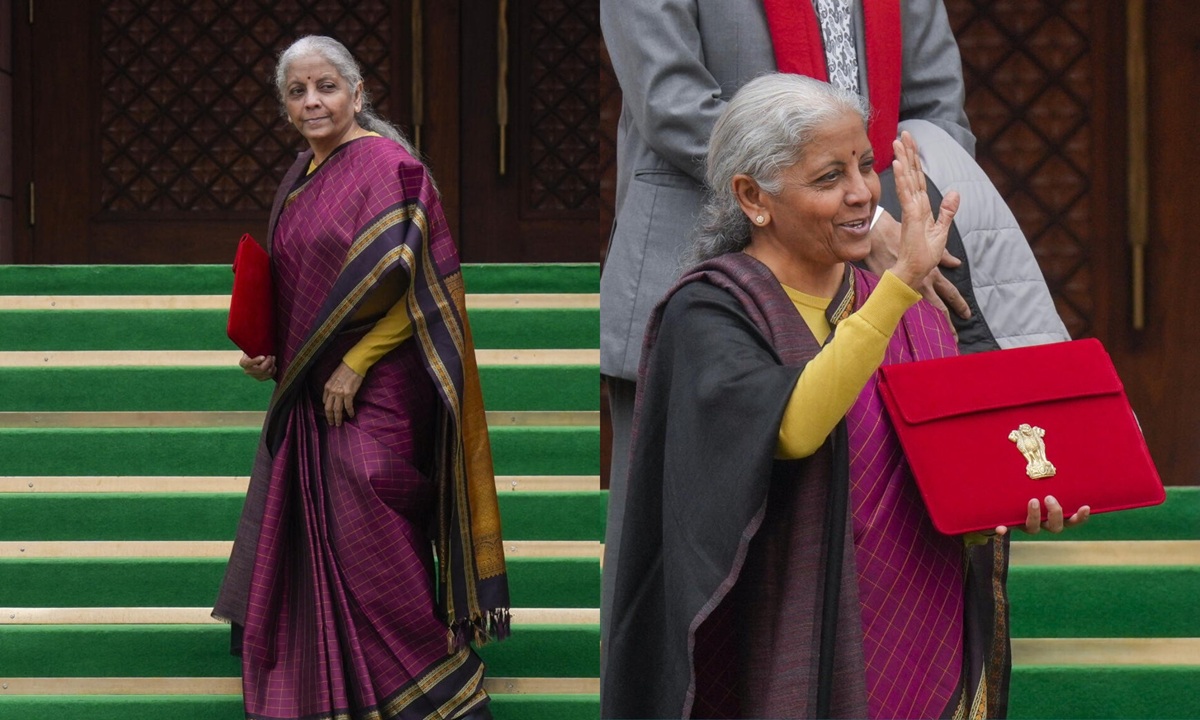
Union Minister for Finance and Corporate Affairs, Nirmala Sitharaman presented the Union Budget 2026-2027 in Parliament on Sunday (February 1). As every year, the Budget focused on several sectors. An 81-minute long Budget speech, the stock market crashed with Sensex plunged 2,370.36 points, or 2.88 per cent, to slip below the 80,000-mark to 79,899.42 during the afternoon trade. However, entrepreneurs from diverse sectors were enthused by specific announcements.
Here are the reactions to Union Budget 2026-27:-
Rajesh Gupta, Managing Director & Founder, Evergreen Recyclekaro India Ltd
Rajesh Gupta, Managing Director & Founder – Evergreen Recyclekaro India Ltd “Union Budget 2026 clearly sharpens India’s strategic focus on rare earths and other critical inputs that are essential for electronics, clean energy and advanced manufacturing. The announcement by Nirmala Sitharaman on dedicated rare earth magnet corridors in Odisha, Kerala, Andhra Pradesh and Tamil Nadu, building on the rare earth permanent magnet scheme announced in November 2025, is a decisive step towards creating end to end capability across mining, processing, research and manufacturing. The continued focus on rare earth permanent magnets, along with the creation of cluster based chemical parks, strengthens the foundation required for India’s EV, electronics and clean energy ecosystems to scale with confidence. This clearly reflects India’s shift from assembly led growth to building control over critical materials and strategic inputs. The parallel strengthening of the semiconductor ecosystem through ISM 2.0, covering equipment, materials and full stack Indian intellectual property, and the higher allocation for the electronics components manufacturing scheme together improve long term domestic supply resilience. Industry is ready to work closely with the Union Government and state governments and we are committed to supporting the creation of compliant and scalable infrastructure to accelerate this national mission.”
Abhishek Malik, Executive Director, Calcom Vision Limited
The Union Budget 2026 reinforces India’s manufacturing ambitions with an enhanced ₹40,000 crore outlay for electronics manufacturing and a ₹10,000 crore SME Growth Fund to strengthen domestic value chains. These measures will support innovation and scale across the sector, creating a more robust ecosystem in which companies like Calcom Vision can contribute to technology-driven growth and energy-efficient solutions, furthering India’s journey as a globally competitive manufacturing hub.
Anurag Jain, CEO & Founder, ORISERVE
The government’s renewed focus on AI and emerging technologies signals a clear intent to move India from technology adoption to technology leadership. Strengthening national missions around AI, deep-tech R&D, and innovation creates a strong foundation for building scalable and responsible digital systems. For the fintech ecosystem, continued policy backing for the AI Mission and R&D funding will accelerate intelligent solutions that improve efficiency and financial inclusion. Initiatives like Bharat Vistaar emphasize the importance of multilingual, AI-led platforms in widening access. This approach is especially relevant for financial services, where trust, personalization, and reach are critical.
Kanishk Agrawal, Chief Technology Officer at Judge group India
The government’s clear focus on AI and emerging technologies marks a defining shift in how India is approaching inclusive economic growth. By strengthening national missions such as the AI Mission, National Quantum Mission, and the R&D and Innovation Fund, the budget signals that deep-tech is no longer peripheral but central to nation-building. The launch of Bharat Vistaar, a multilingual AI platform integrating agri-stack portals and ICAR data, is particularly significant it reflects how advanced technology can be democratised for real-world impact. AI-led advisory tools have the potential to transform agriculture by improving productivity, enabling data-driven decisions, and reducing risks for farmers, especially in underserved regions. What stands out is the intent to align innovation with accessibility, ensuring that technology-driven growth benefits not just enterprises and institutions, but also grassroots stakeholders who form the backbone of India’s economy.
Mandar Patil, Senior Vice President, Sales at Cyble
The government’s strong push toward AI and emerging technologies marks a pivotal step in positioning them as engines of inclusive economic growth and national development. Strengthening national missions around AI, quantum computing, and deep-tech R&D signals a clear intent to build future-ready digital infrastructure at scale. As initiatives like Bharat Vistaar leverage multilingual AI platforms to democratize access to data and insights, it becomes equally critical that cybersecurity is embedded by design into these systems. From protecting sensitive agricultural and citizen data to ensuring the integrity of AI-driven decision-making, secure-by-default frameworks will be central to long-term trust and adoption. Enhanced funding for AI and innovation creates an opportunity to integrate advanced threat intelligence, continuous monitoring, and resilient architectures into next-generation platforms. A secure AI ecosystem will not only accelerate innovation but also ensure that India’s digital growth remains trusted, resilient, and sustainable as the country advances toward its Viksit Bharat vision.
Vishal Sood, Founder & CEO, Placecom (an AI-driven placement and recruitment platform)
The Union Budget must prioritize the integration of Artificial Intelligence into India’s higher education system, making it mandatory across all disciplines. AI has the potential to revolutionize learning by offering personalized education, adaptive assessments, and data-driven career guidance. By mandating AI-driven curricula, upgrading teacher training, and fostering research in AI, we can create a future-ready workforce. Additionally, encouraging collaboration between academia and startups will drive innovation, allowing MSMEs to leverage AI for growth. Targeted budget allocations should fuel these efforts, ensuring that students graduate with skills aligned to industry needs, bridging the gap between education and employment. With AI at the core of education, we can empower our youth with the skills needed to thrive in an increasingly digital world, making India a global leader in both innovation and talent development.
📍Central Government Expenditure
— PIB India (@PIB_India) February 1, 2026
➡️Budget Estimates for 2026-27 (in ₹ crore)👇#ViksitBharatBudget #Budget2026 @nsitharaman @FinMinIndia pic.twitter.com/UvIRtV1VXX
Popular Categories
Read More Articles

Business
Why India’s Next Banking Crisis Won’t Start With Bad Loans by Malik Mubashir February 2, 2026
Business
Budget 2026: Big Push for Orange Economy to Create 2 Million Skilled Professionals with ₹250 Cr for Animation Labs by Awadh 360° Desk February 1, 2026
Education
What is the UGC equity rule controversy that has triggered protests and resignations? by Awadh 360° Desk January 28, 2026
India
Health Worker’s Act of kindness shines Lucknow hospital by Shamikh Rais Siddiqui January 26, 2026