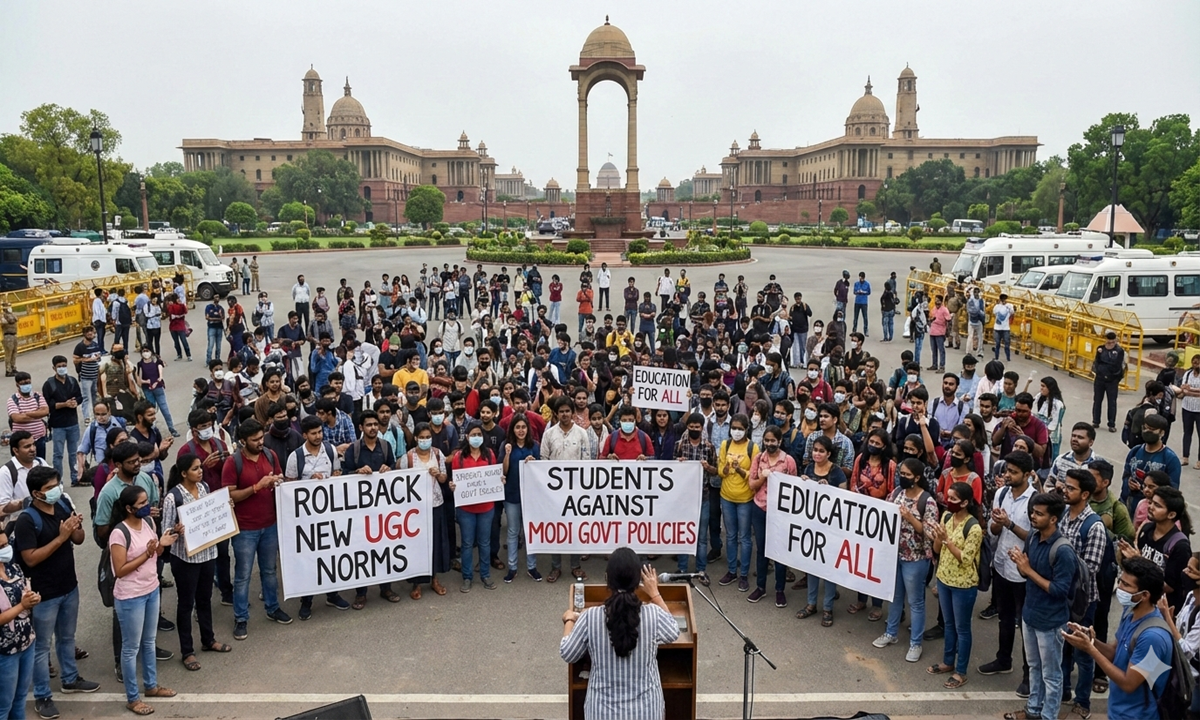
What is the UGC equity rule controversy that has triggered protests and resignations?
NEW DELHI: Amid an uproar over new University Grants Commission rules, the government will soon release facts to counter misinformation and clear confusion related to the regulations, sources told News18. The sources stated that misuse of the rules would not be tolerated under any circumstances, emphasising that they are designed to create a safe campus for all.
The new rules notified by the UGC on January 13—the Promotion of Equity in Higher Education Institutions Regulations, 2026—have sparked widespread criticism from general category students who argue that the framework could lead to discrimination against them.
Under the new regulations, introduced to stop caste-based discrimination in colleges and universities, the UGC has asked institutions to set up special committees, helplines and monitoring teams to handle complaints, especially from SC, ST and OBC students.
Some of the provisions of the regulation include establishing an equal opportunity cell catering to SC, ST and OBC communities, setting up equity committees or monitoring mechanisms, helplines (including 24/7 options in some interpretations), regular reporting to UGC, and legal accountability on institution heads for compliance. Every higher education institution shall also constitute a smaller body known as 'equity squads' for maintaining vigil and preventing discrimination.
In case of non-compliance, HEIs face regulatory actions, including suspension of recognition and participation in UGC schemes, among others.
Opposition to the regulations surfaced soon after they were notified, with several upper-caste organisations contending that the provisions are susceptible to misuse and may result in false complaints against students and faculty from their communities. They also argue that it could lead to presumption of guilt, especially against general-category students and faculty.
In Jaipur, groups such as the Karni Sena, Brahmin Mahasabha, Kayastha Mahasabha and various Vaishya organisations have united under the banner of the Savarna Samaj Coordination Committee (S-4) to oppose the move.
On Tuesday, students from upper caste communities called for a protest outside the UGC headquarters in Delhi, saying that the new regulations issued by the commission could lead to chaos on campuses.
Speaking to PTI, Alokit Tripathi, a PhD student from Delhi University, said the new rules will create complete chaos in colleges as the burden of proof will now be completely shifted on to the accused, and there were no safeguards for wrongly accused students. "The new regulations are draconian in nature. The definition of victim is already predetermined. Victim can be anyone in the campus," Tripathi said. "With the proposed equity squads, it will be akin to living under constant surveillance inside the campus," he said.
Dissatisfaction grows over new UGC policies
The growing unrest over the new UGC regulations is now affecting administrative and political establishments, with resignations starting to follow.
Bareilly city magistrate Alankar Agnihotri resigned from service on Monday, citing deep disagreement with government policies, especially the new UGC regulations, which he said could foment caste-based discontent, officials told PTI. He described the new University Grants Commission rules as a "black law", alleging that they are vitiating the academic environment in colleges and should be withdrawn immediately.
Meanwhile, the vice president of the BJP Kisan Morcha from the Salon constituency in Rae Bareli, Shyam Sundar Tripathi, also resigned from his post, citing dissatisfaction over new UGC policies. "Due to the black law, like the reservation bill brought against the children of the upper caste, I am resigning from my post. This law is extremely dangerous for society and also divisive. I am completely dissatisfied with the bill. There is great resentment. I do not support this reservation bill. Supporting such an unethical bill is completely against my self-respect and ideology," he wrote in a letter to Prime Minister Narendra Modi.
Popular Categories
Read More Articles

Business
Axis Bank Posts Strong 6% QOQ Growth In Deposits And Advances by Awadh 360° Desk April 26, 2026
Education
IIMC Alumni Meet Held in Lucknow, Tribute Paid to Senior Journalist by Awadh 360° Desk April 22, 2026
Travel and Tourism
Cut Queue Times: Lucknow's Imambara Complex Enters Digital Age With QR Tickets by Awadh 360° Desk April 18, 2026
Entertainment
India’s First All-Women Mission Band Releases ‘Lipstick’ Anthem by Awadh 360° Desk April 18, 2026