Journey Of An AMU Student Who Became The 'Father Of Indian Molecular Biology'
In 1949, a young student from Aligarh Muslim University was imprisoned for his role in student protests. Little more than a decade later, the same man would lay the foundations of molecular biology in India. Siddiqi's life reminds us that intellectual achievement and civic duty can coexist; they can reinforce one another. Nowadays when scientific success is increasingly measured through patents, rankings, and technological breakthroughs, the question that doesn't get much attention is what responsibilities do scientists owe to society? Few lives answer that question more compellingly than that of Obaid Siddiqi. While he is celebrated as the pioneering molecular biologist who founded the Molecular Biology Unit at the Tata Institute of Fundamental Research (TIFR) in Mumbai and later co-founded the National Centre for Biological Sciences (NCBS) in Bengaluru, far less attention has been paid to the young student whose political activism, imprisonment, and lifelong commitment to public institutions shaped the scientist he would become.
We often judge scientific success by patents, rankings, and new technologies. Yet one question receives far less attention: What responsibilities do scientists owe to society? Few lives answer that question more compellingly than that of Obaid Siddiqi. While he is celebrated as the pioneering molecular biologist who founded the Molecular Biology Unit at the Tata Institute of Fundamental Research (TIFR) and later co-founded the National Centre for Biological Sciences (NCBS), far less attention has been paid to the young student whose political activism, imprisonment, and lifelong commitment to public institutions shaped the scientist he would become. Siddiqi's life shows us that intellectual achievement and civic duty can reinforce one another.
To appreciate the depth of Siddiqi’s social conscience, one must return to his years as a student at Aligarh Muslim University and the turbulent socio-political climate that surrounded him. In the late 1940s, at Aligarh Muslim University (AMU), the Muslim League had dominated campus politics; however, equally powerful factions of the Congress and the Communists also existed. Drawn by his deep compassion for the poor and understanding of human condition, labourers, and other marginalised sections of society, he gravitated towards leftist politics and the Communist Party of India (CPI), which primarily operated through the All India Students Federation (AISF). This belief would shape his student activism and, in many ways, foreshadow his lifelong commitment to the public welfare and reveal a continuity between the politically engaged student at AMU and the institution-builder that later characterised his scientific career.
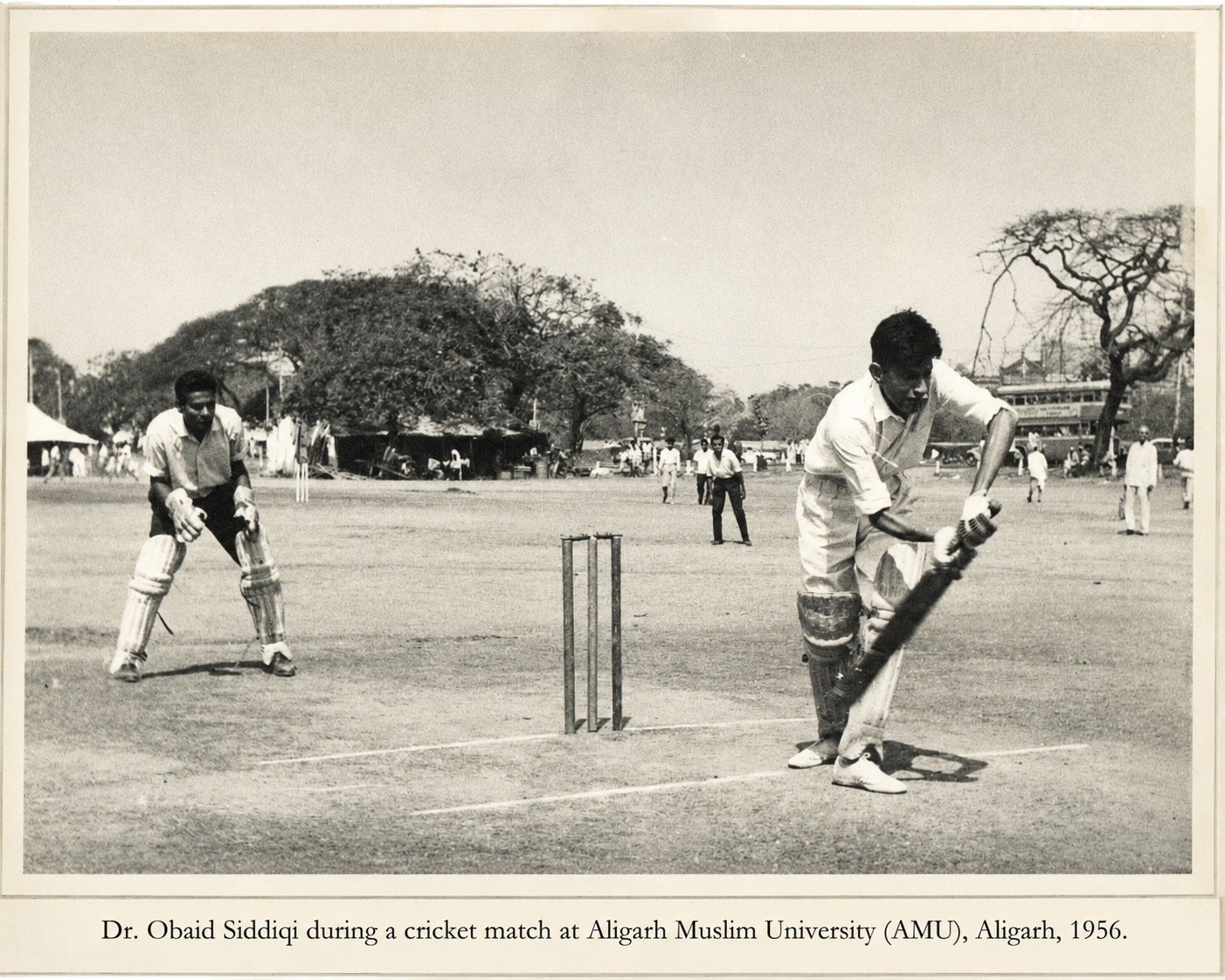
He was born on 7 January 1932 in Basti, Uttar Pradesh, India. His family later settled in Aligarh in 1948, where he enrolled at Aligarh Muslim University (AMU), earning his B.Sc. in Botany and Zoology in 1951. He was heavily influenced by the progressive Marxist ideology prevalent during this period.
It was during these years that Siddiqi's political convictions were put to the test. In 1949, primary and secondary school teachers across Uttar Pradesh went on strike, demanding fair wages and formal recognition of their unions. During a peaceful march in Lucknow, the state police unleashed a lathi-charge that left dozens of teachers and supporting students severely injured. News of the government's violent crackdown triggered waves of anti-government student protests at educational institutions throughout the province. When the fallout reached AMU, female students from the Women's College staged a protest march in support of the striking teachers. The Principal of the Women's College opposed the political mobilisation, viewing the march as a breach of institutional discipline. The college administration responded by penalising the participating students, infuriating the broader student body and prompting the campus's left-wing student activists to intervene. Siddiqi and his allies organised university-wide demonstrations. The focus of the protest quickly shifted from supporting the U.P. teachers to defend the punished female students. Rather than negotiating, the university administration and the local police cracked down on the organisers. Siddiqi, along with several student activists and a supportive faculty member, including Khalil Rahman, secretary of the Progressive Writer's Association, Mirza Mumtaz Hussain, President of the students' Federation, S.M. Tonki was arrested because of his leading role in the movement. He was jailed for over two years (1949–1951), temporarily halting his studies before he eventually returned to complete them.
Following India's first parliamentary elections, Moonis Raza (who was then a young geography lecturer at AMU and a prominent leftist intellectual) organised and led a group of students and scholars to Delhi. They secured an audience with Prime Minister Jawaharlal Nehru in his office. Moonis Raza and the group argued that, since the national political climate had finally stabilised, it was unnecessarily cruel to keep talented young minds like Obaid Siddiqi imprisoned, thereby denying them the opportunity to pursue their studies. The petition had the diplomatic backing of Dr. Zakir Husain, the Vice-Chancellor of AMU. Nehru listened to Moonis Raza's appeal, agreed to intervene directly, and later raised the matter with Uttar Pradesh Chief Minister Govind Ballabh Pant, which ultimately led to Siddiqi's release.
What drew the young Obaid Siddiqi to student politics cannot be reduced to partisan ideology alone. One colleague later remembered that Siddiqi loved quoting Kaifi Azmi, stating that although he was born in a colonized India and experienced the Partition of the subcontinent, he hoped to die in a united, truly secular, and socialist country. This belief continued to influence his views long after he stepped away from organized politics. The prison may have ended his political activism, but not the passion that drove him to it.
Siddiqi’s journey soon saw a transition from his political student life to laboratory-based scientific research, which became the new focus of his public service and contribution to the nation. Educationist Anil Sadgopal recalled that he requested permission to use a meeting room for an educational project; Siddiqi readily agreed, remarking, "TIFR is an institution supported by government funds, which means people's money... What else are government buildings meant for, if not for acting for people's welfare?" He even offered to arrange tea and refreshments at his own expense.
After completing his M.Sc. in Botany at Aligarh Muslim University. He was later appointed as a lecturer in the University's Botany Department in November 1953. It was there that his teacher, Dr. Riyasat Khan, encouraged him to pursue wheat genetics, a suggestion that led him to the Indian Agricultural Research Institute (IARI) in 1957.
His early research focused on wheat rust resistance until an unexpected hailstorm destroyed a year's worth of experimental material, bringing months of work to an abrupt end. What felt like a shattering setback soon transformed into a turning point that moved him from agricultural genetics to the emerging field of microbial genetics and molecular biology.
He subsequently joined the University of Glasgow (1958–1961), where he worked under the renowned geneticist Guido Pontecorvo. His work at Glasgow marked his entry into microbial genetics, an area undergoing rapid development during this period. Although a promising scientific career in the United States lay before him, Siddiqi chose a different path.
The laboratories of America offered prestige, but his ambitions were rooted elsewhere. Driven by a sense of responsibility towards India and its youth, he returned in 1956 on the invitation of Bhabha, determined not merely to conduct research but to build the institutions and scientific culture for the newly independent nation.
In 1962, he established the Molecular Biology Unit at the Tata Institute of Fundamental Research (TIFR), introducing a new direction for biological research in India. In the 1980s, which was almost three decades later, he played a central role in founding the National Centre for Biological Sciences (NCBS) in Bengaluru, an institution that would emerge as one of the country's leading centres for biological research.
Siddiqi's approach to institution-building was strongly influenced by Homi Bhabha's view that scientific institutions were built primarily through people rather than infrastructure. He recruited young researchers on the basis of scientific ability.
Siddiqi resisted bureaucratic rigidity and encouraged an environment in which young scientists could question established ideas and pursue independent lines of inquiry while also engaging in open intellectual exchange. Former colleagues recalled that his presence never felt like that of a boss to his junior researchers. He often used to sit beside them, leaning over their data, inquiring about the status of the experiments and leaving them with a new hypothesis and questions to dwell on. His concern for public institutions remained with him long after his student years. As former colleague Sukant Khurana observed, "He gave lectures in the late 1990s and early 2000s against how religious forces had brought astronomy into official coursework. Over our last two years' interactions, he was deeply concerned about how many Central Universities had gone down the drain due to political interventions." For him, institution-building was not merely an administrative exercise but the creation of a community with scientific temperament, capable of sustaining scientific excellence while also serving society through science.
Siddiqi was not a man who confined his intellect to a single discipline. His scientific contributions spanned fields as diverse as plant biology, Drosophila, bacteria, and genetics. Yet his curiosity was never limited to research alone.
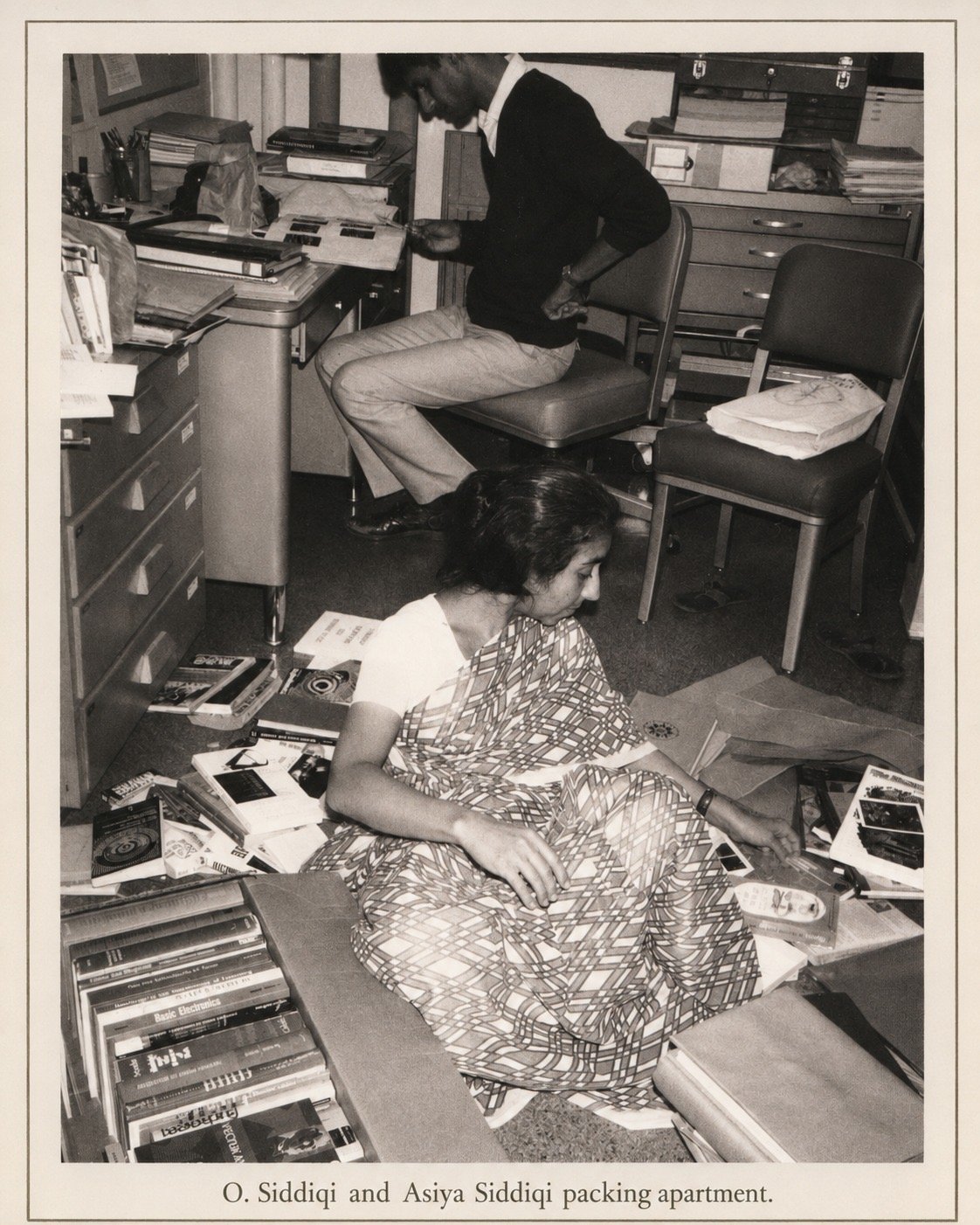
In an interview, Siddiqi revealed that, during his student years, he had once dreamed of becoming a photographer. That aspiration took shape in the 1940s when he came into contact with Sunil Janah, whose powerful images of the Bengal Famine remain among the most enduring visual records of the tragedy. At the time, he himself was engaged in relief work during the famine. Inspired by Janah's work and vision, He pursued it with remarkable enthusiasm for years. Though an uncle later convinced him to move away from a full-time career in photography, his passion for the camera never faded. Fellow scientists often noted that he treated molecular biology like photography. Late in life, that photographer in him found a new expression when he collaborated with his daughter, photographer Diba Siddiqi, on Rooh: The Enduring Spirit, a project that blended social science, history, and art. It brought together family photographs, many of which were taken and developed by Siddiqi himself, alongside his thoughts on history, politics, philosophy, and language history, politics, philosophy, and language. For him, mapping the neural pathways of fruit flies or decoding genes was just another method of revealing the hidden structures of nature.
He found equal delight in the world of Urdu literature, returning time and again to the poetry of Mir, Ghalib, Sauda, and Iqbal. Yet, among these literary giants, it was Ghalib who occupied a place apart. His verses earned a lasting and cherished place in his heart in a way that no other poet's did.
Siddiqi's engagement with language extended far beyond his love for Urdu poetry. He was equally at ease in several languages, including English, Hindi, Sanskrit, and a little bit of Persian. He refused to let scientific ideas remain trapped within academic jargon, believing that real knowledge had to reach ordinary people. He readily explained science and its social implications to rural teachers in simple Hindi. Khurana noted that he not only translated books into Hindi for underprivileged schoolchildren without charge but also challenged bureaucratic red tape whenever it stood in the way of progress. He was the kind of mentor who would hand over his own books to students, knowing full well he'd never see them again. It made no difference whether he was standing in a cramped, underfunded college classroom or a state-of-the-art research hall; Siddiqi brought the same reminder that scientific curiosity belonged everywhere. Behind all the achievements and honours, what mattered most to him came down to two simple things: helping generations of young South Asian researchers find their footing and humbly standing up for rational, progressive values whenever it mattered most. Although he passed away on 26 July 2013, his vision still lives on through the hundreds of young scientists he trained and the thousands more he inspired.
To remember Obaid Siddiqi only as a molecular biologist is to overlook an equally important part of his legacy.
Perhaps Siddiqi's answer to the question of what responsibilities a scientist owes to society was that a scientist's responsibility does not end in the laboratory, and that the pursuit of scientific knowledge need not come at the expense of social commitment. The laboratory and the public sphere are not opposing worlds; in Siddiqi's life, they were deeply connected.
This article has been written and researched by Afiya and Saud Bin Anees. We are students at Aligarh Muslim University (AMU) in Mass Communication and Engineering, respectively, and share a keen interest in writing and documenting overlooked histories and political movements. Saud currently runs an Instagram page, @saudbinaneess, with a community of over 10k followers.
Popular Categories
Read More Articles

Technology
Dyson’s new Rs 47,000 toothbrush can ‘see’ between your teeth. Would you pay? by Awadh 360° Desk September 3, 2026
Politics
Seven Streams, One Goal: Inside PM Modi's 'Saptadhara' Vision To Build A Viksit Bharat by Abhishek Tandon August 30, 2026
Politics
Bankipur bypoll: More than one seat, Prashant Kishor’s first real political breakthrough by Awadh 360° Desk August 4, 2026
India
How Water Infrastructure is Improving Agricultural Productivity, Strengthening Water Security and Enhancing Climate Resilience in Drought-Prone Regions by Kavita Shirvaikar July 25, 2026