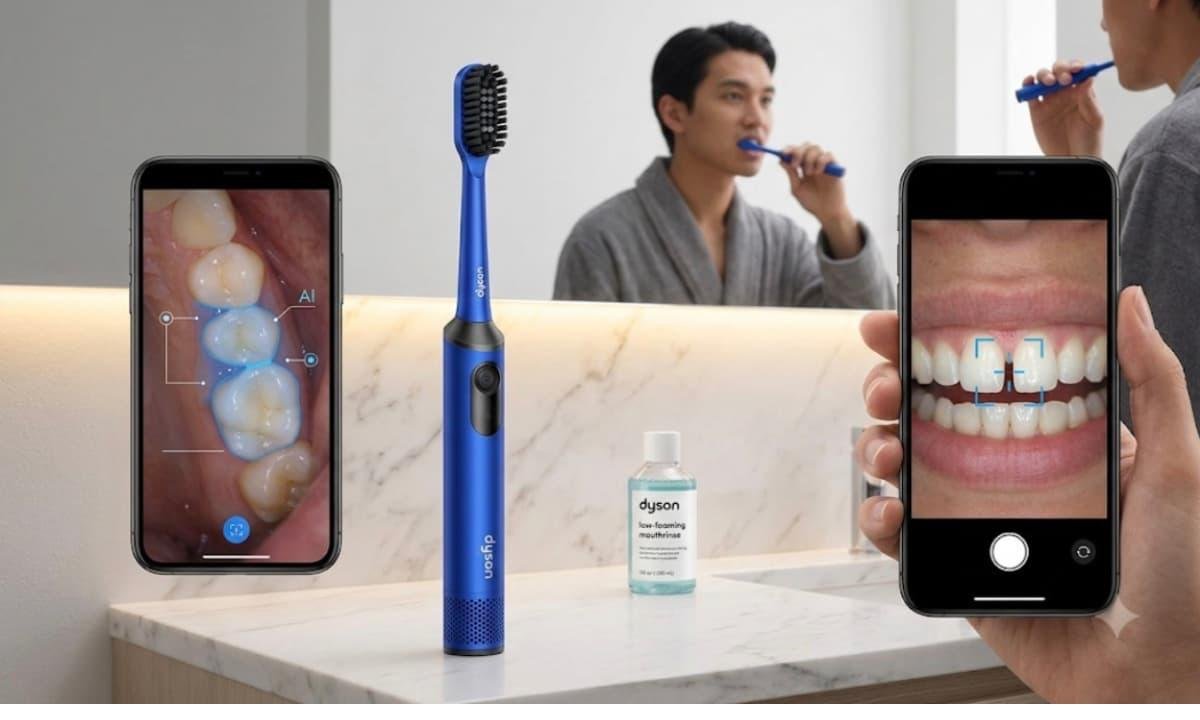
Dyson’s new Rs 47,000 toothbrush can ‘see’ between your teeth. Would you pay?
NEW DELHI Dyson has entered the oral-care market with the CameraJet, a high-tech electric toothbrush that combines a built-in camera, artificial intelligence, machine learning and a precision mouthwash jet to target gaps between teeth while users brush. Priced at USD 499.99, or about Rs 47,000, the device was unveiled in Paris on September 1 after six years of research, development and engineering.
The CameraJet is designed around a problem Dyson says conventional toothbrushes often fail to address: cleaning between teeth. Instead of relying on users to brush first and floss separately, the device attempts to combine brushing and interdental cleaning into a single routine.
At the centre of the system is a 100,000-pixel macro camera built into the brush head. The roughly 1mm intraoral camera captures 28 live images every second, while Dyson's Gap Optical Targeting system uses machine learning to identify, track and predict gaps between teeth in real time.
Once the system detects a gap, it can activate a precision jet of mouthrinse. Dyson says the response takes as little as 100 milliseconds. The company has developed a conical jet rather than the narrow, needle-like streams used by some conventional water flossers. According to Dyson, the wider spray is designed to sweep plaque from between teeth while operating at a lower pressure intended to be gentler on gums and enamel.
The jet system is supported by a 12.5ml anti-gravity mouthrinse tank and a diaphragm pump. Dyson says the design allows the device to maintain controlled liquid delivery even when the toothbrush is tilted or held horizontally, which is particularly relevant when users are cleaning the back teeth. The system can deliver up to 0.15ml of liquid in a targeted burst.
The technology behind the toothbrush goes beyond its camera. Dyson says the CameraJet runs on 16 million lines of code and that its machine-learning system was trained using 470,000 dental images collected during development. The company also worked with dental researchers to develop a proxy for plaque, allowing engineers to test different jet designs and optimise the system.
Dyson has also redesigned the actual brushing mechanism. Its variable sonic oscillation system changes the angle of movement while brushing and is designed to prevent bristles from stalling against teeth. The brush head moves at nearly 1,000 times per second, while the company says external testing found the system removed up to 69% more plaque than leading premium electric toothbrushes in hard-to-reach areas.
The brush head combines different types of bristles for surface cleaning and gumline cleaning. Dyson is also offering a sensitive brush-head option for users who need gentler brushing. Each brush head contains an RFID tag that allows the toothbrush to recognise the head, track the number of cleaning cycles and alert users when replacement is due.
Another unusual feature is the toothbrush's connection to a smartphone. The CameraJet uses 2.4GHz Wi-Fi and Bluetooth to connect with the MyDyson app. Users can access a live view from the camera, guided cleaning sessions, instructional content, brushing and flossing insights, coverage maps and personalised feedback.
The live camera feature effectively allows users to see parts of their mouth from the toothbrush's perspective. The system can show where users are cleaning and where areas may have been missed, potentially turning brushing into a more data-driven routine. Users can also choose between automatic detection and manual jetting modes and adjust brushing intensity, including a Gentle mode.
The presence of a camera inside a toothbrush has also raised privacy questions. Dyson says the camera is active only during live viewing or automatic jetting. It says images processed by the device or MyDyson app are not recorded, stored or shared, and that neither Dyson nor third parties can access them.
Dyson has developed dedicated oral-care products to work with the CameraJet. Its toothpaste uses a non-foaming formula without SLS, a common foaming agent, because excess foam could obstruct the camera's view. The company has also developed a low-foaming mouthrinse for the precision jet. Both formulations contain sodium fluoride, while the mouthrinse also includes ingredients such as glycerin, phosphates and xylitol. The products are available in Ginger Mint and Spearmint flavours, with a Peppermint Sensitive toothpaste option.
The complete system includes the CameraJet toothbrush, charging dock, travel case, toothpaste and mouthrinse. It is being offered in Ceramic Ultra Blue and Ceramic Pink. Dyson has launched the system through its website, Demo Stores and selected retailers.
The price, however, is likely to remain one of the biggest talking points. At nearly Rs 47,000, the CameraJet costs far more than conventional electric toothbrushes and even many premium smart toothbrushes. Its unusual camera-based approach has also prompted online questions about whether users actually need to watch a phone screen while brushing.
The technology points to a broader direction for personal-care devices. Instead of simply performing a mechanical task, products such as the CameraJet can use cameras and machine learning to observe how a person performs that task, identify areas that need attention and provide automated feedback.
For Dyson, the toothbrush represents a new category beyond its established vacuum cleaners, air-treatment products and hair-care devices. The company spent six years developing the technology and says hundreds of engineers and dental professionals were involved in the process.
The longer-term potential could extend beyond simply automating flossing. Camera-based oral-care systems could eventually provide more detailed tracking of brushing habits, identify recurring areas of poor cleaning and use accumulated data to personalise cleaning routines. Future devices could also combine imaging, sensors and artificial intelligence to provide increasingly precise guidance on everyday oral hygiene.
For now, Dyson is positioning CameraJet as an attempt to make interdental cleaning part of the brushing process rather than an additional task. Whether consumers are willing to pay nearly Rs 47,000 for that combination of camera, AI and precision cleaning will determine whether the technology becomes a new direction for electric toothbrushes or remains a premium niche product.
Popular Categories
Read More Articles

Politics
Munich Comes To Delhi: India's Seat At The Global High Table by Abhishek Tandon October 14, 2026
Education
CSR initiatives give Bahraich govt schools an infrastructure boost by Awadh 360° Desk October 5, 2026
Politics
Seven Streams, One Goal: Inside PM Modi's 'Saptadhara' Vision To Build A Viksit Bharat by Abhishek Tandon August 30, 2026
Politics
Bankipur bypoll: More than one seat, Prashant Kishor’s first real political breakthrough by Awadh 360° Desk August 4, 2026